
2026 Toronto Regional Conference
2026 Toronto Regional Conference
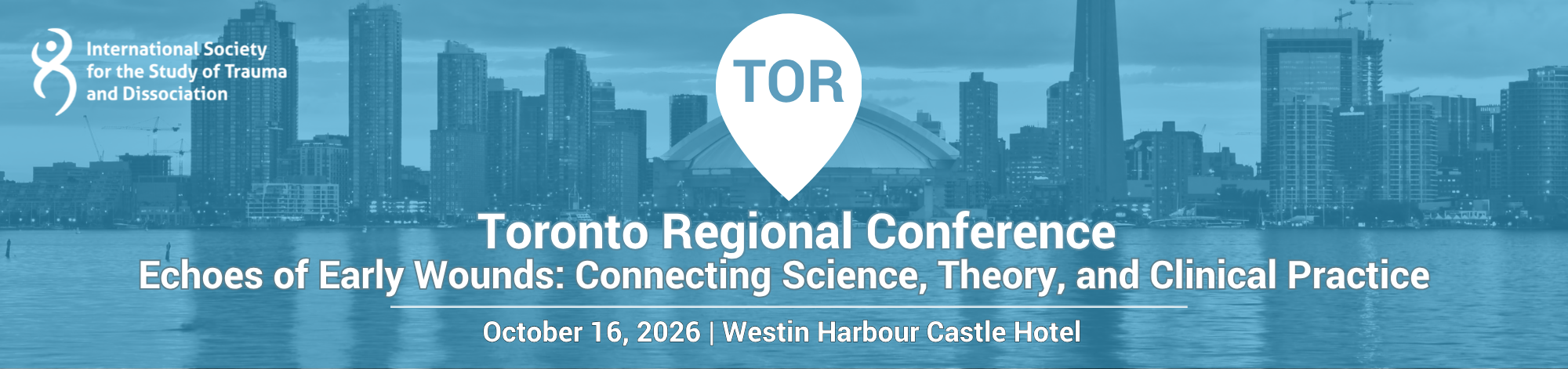
Echoes of Early Wounds: Connecting Science, Theory, and Clinical Practice
October 16, 2026
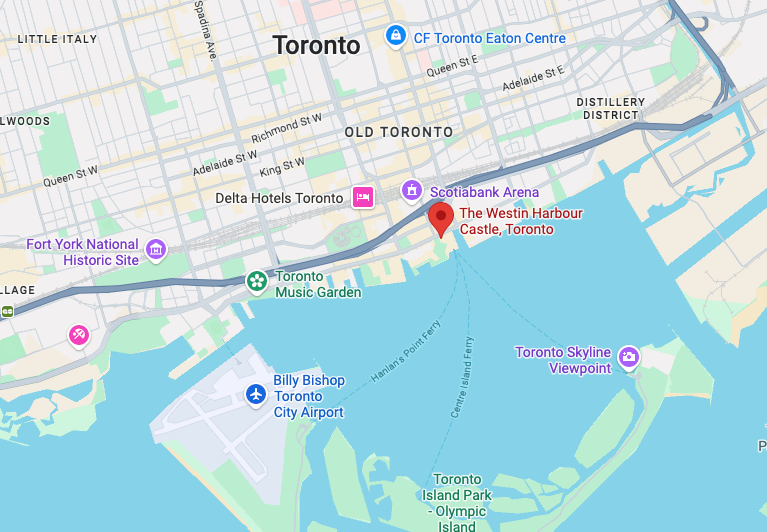
Westin Harbour Castle Hotel | Toronto, Ontario, Canada
The International Society for the Study of Trauma and Dissociation (ISSTD) is excited to announce that registration is now open for the 2026 Toronto Regional Conference, Echoes of Early Wounds: Connecting Science, Theory, and Clinical Practice.
Join us for a day of learning, connection, and collaboration featuring two 90-minute plenary presentations by Dr. Frank Corrigan and Dr. Milissa Kaufman. The Toronto Regional Conference is an opportunity to connect with fellow clinicians, researchers, and students, exchange ideas, and learn from leaders in the field.
Together, we’ll explore how the echoes of early wounds shape development across the lifespan, examining the science, theory, and clinical practice of complex trauma and dissociation. Whether you’re looking to deepen your knowledge, gain practical insights, or connect with colleagues who share your passion, we hope you’ll join us in Toronto for this meaningful event.
Meet Our Plenary Presenteres!

Frank Corrigan, MD
Frank Corrigan qualified in Medicine (MBChB) in Glasgow in 1976 and started working in psychiatry in 1977. He was from 1985 a consultant in general psychiatry with the NHS in Scotland. Over the decades he specialised gradually in the treatment of complex trauma and dissociative disorders, training in a number of modalities. He is now in independent psychiatric practice and is mainly involved in Deep Brain Reorienting, a modality which he developed which has been the subject of a clinical and neuroimaging study in London, Ontario. He has been a co-author of three books and a number of papers. He graduated from Aberdeen University with a degree in Medicine in 1989.
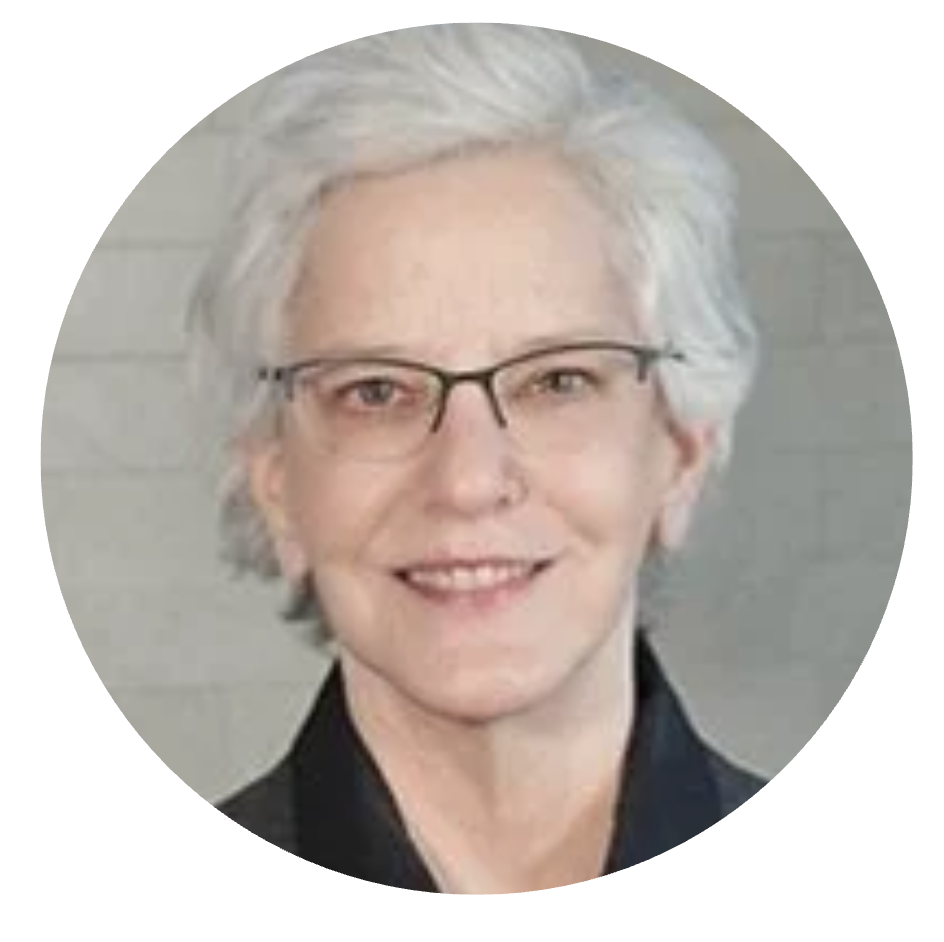
Milissa L. Kaufman, MD, PhD
Milissa Kaufman, MD, PhD, serves as Associate Professor of Psychiatry at Harvard Medical School. She is a trauma psychiatrist, clinician, and researcher focused on advancing evidence-based care for individuals affected by post-traumatic stress disorder and dissociative identity disorder. As Kingdon Saylor Endowed Director of Trauma Programs at McLean Hospital, she provides strategic leadership across trauma-focused clinical services, research initiatives, and educational programs. Dr. Kaufman founded and co-directs the Dissociative Disorders and Trauma Research Program and serves as Medical Director of the Trauma Continuum of Care at Hill Center.
Dr. Kaufman plays a central role in building clinical and research capacity in trauma psychiatry. She directs both the Trauma Scholar Program and the Initiative for Integrated Trauma Research, Training, and Care at McLean and oversees trauma psychiatry education for the Massachusetts General Hospital/McLean Hospital Psychiatry Residency. She serves on the Board of Directors of the International Society for the Study of Trauma and Dissociation and has received numerous local, national, and international awards recognizing contributions to research, clinical care, and training.
The Dissociative Disorders and Trauma Research Program (DDTRP), co-led by Dr. Kaufman and Dr. Lauren Lebois, uses a multimodal approach to study trauma-related dissociation, integrating clinical and neurocognitive assessment with functional and structural neuroimaging and genetic methods. A central aim of the DDTRP is the identification of biomarkers of dissociation and recovery. This biomarker-focused work has been supported by multiple awards from the National Institute of Mental Health (NIMH).
For more than a decade, the lab has partnered with a DID/PTSD lived-experience advisory panel (LEAP). Panel members contribute to study design, implementation, and dissemination, helping to shape research questions, contextualize findings, and guide responsible communication of results.
Early registration ends September 15, 2026 at 5:00 PM US Eastern Time.
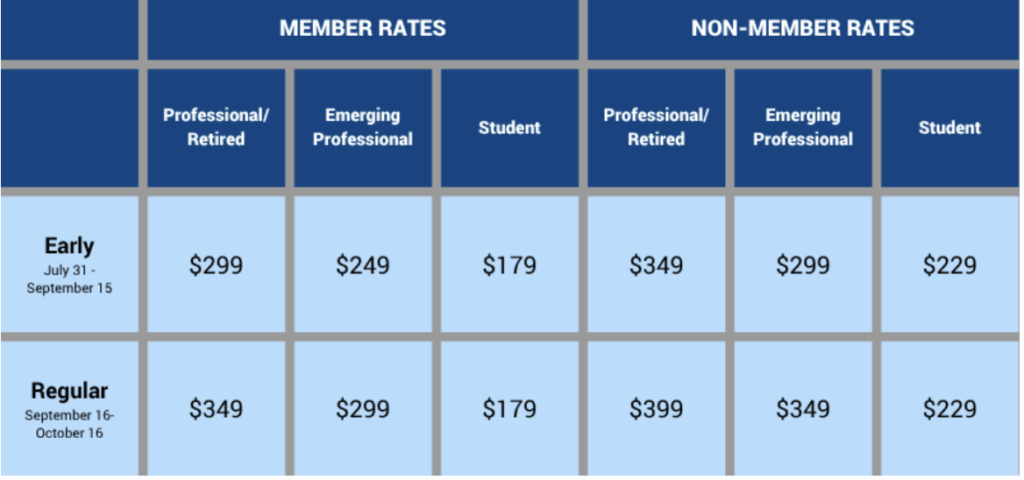
Student registrations are reviewed and accepted upon approval. Student registrants must provide proof of current status in a related field and must submit verification by email or fax.
Group rates are available for groups of five or more from the same hospital, facility, or university. Please email ISSTD HQ for assistance with group rates. For groups of 5-9 the discount is 10% off registration fees, for groups of 10 or more the discount is 15% off registration fees.
Online registration allows for payment via credit card only. If you wish to pay via check or wire transfer, please request a paper registration form by emailing cfas@isst-d.org. We will process the form and provide information for making payment once this is completed.
Visit Toronto
Toronto, the capital of Ontario and Canada’s largest city, is a vibrant, multicultural destination with something to offer every visitor. October is an especially beautiful time to experience the city, as colorful fall foliage transforms its parks and neighborhoods into a picturesque backdrop.
From world-class dining that reflects Toronto’s rich cultural diversity to seasonal food and drink experiences, there are countless ways to unwind after a day of learning. Explore unique neighborhoods, discover stunning architecture on a walking tour, or visit one of the city’s renowned museums and art galleries. Whether you’re looking for exceptional cuisine, cultural experiences, or a relaxing evening stroll, Toronto offers endless opportunities to make the most of your conference experience.

Your Guide to Local Attractions from Destination Toronto.
Attractions
Getting Around Toronto
Food and Drink
Conference Venue
The Westin Harbour Castle, Toronto
Reserve Your Room.
Room block is available through September 15, 2026.
Travel
Cancellations must be received in writing via email or fax. A processing fee of $45 will be charged for cancellations received on or before September 15, 2026 at 5:00 PM ET. No refunds will be issued for no-shows. Refund requests will not be accepted after September 15, 2026. Not all requests will be granted. Substitutions for attendees are accepted at any time.
ISSTD is fully committed to conducting all activities in strict conformation with the APA and ASWB grievance procedures.
During this conference, conference organizers, presenters and staff will address any concerns that arise. Every effort will be made to address the concerns during the conference when possible. If these individuals are unable to address the participant’s concerns, the complaints and grievances shall be presented in writing to ISSTD Headquarters at cfas@isst-d.org. These will be forwarded on for review by the Virtual and Regional Conference Committee.
Social Workers: Should social workers have a specific grievance, these grievances will be addressed by D. Michael Coy, LICSW. In situations where the social worker would have a conflict of interest, then, Christine Forner, MSW will review the grievance.
ISSTD strives to resolve grievances in a manner that is in the best interest of the participant. All complaints and grievances are reviewed within 5 working days. Formal grievances are required to be written and emailed as directed above and will be responded to within 15 business days.
Disability Policy (ADA)
We would be happy to accommodate your ADA needs. Please contact ISSTD Headquarters via email at cfas@isst-d.org or via phone at 844.994.7783 for assistance.
Registration Contact Information
Email: cfas@isst-d.org
Phone: 844.994.7783
Fax: 888.966.0310